

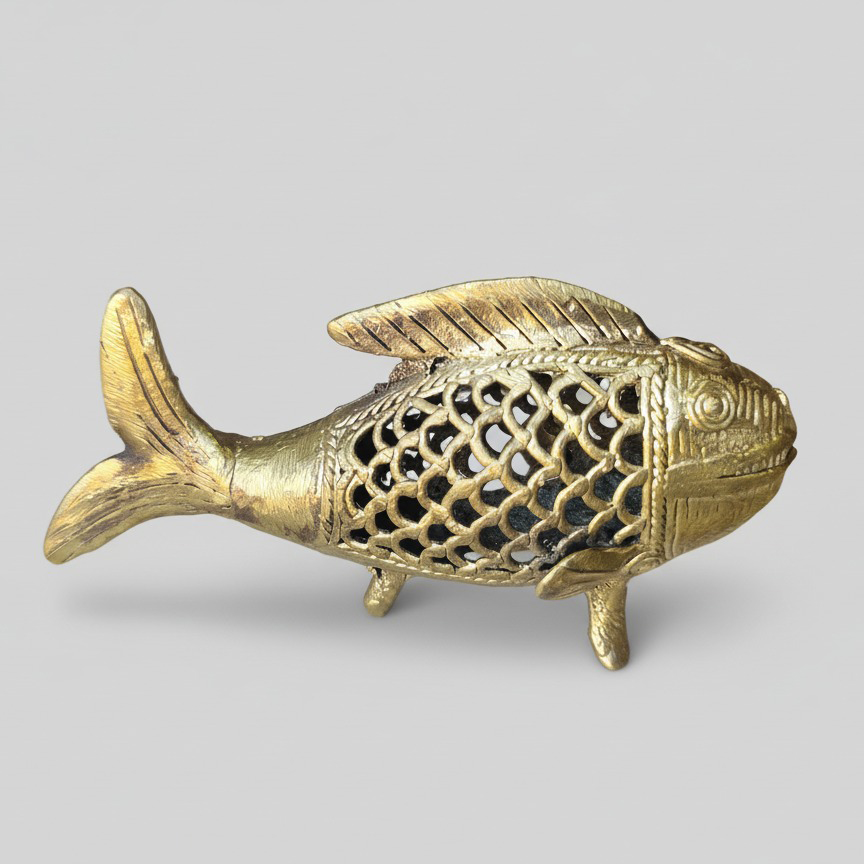
From the enigmatic Dancing Girl of Mohenjo-Daro (2500 BCE) to modern tribal ateliers across Bastar, Chhattisgarh, and Bankura, Dokra metal casting is one of humankind's oldest surviving metallurgical arts.
The Lost-Wax (Cire Perdue) Alchemy
Each Dokra masterpiece is completely non-ferrous, hollow-cast, and 100% unique — no two pieces can ever be identical because the clay mold must be broken to release the finished bronze-brass sculpture.
- Clay Core Creation: Natural clay is sculpted into the rough core figure and sun-dried.
- Beeswax Thread Winding: Pure beeswax is extruded into fine filaments and coiled around the core to create intricate textural details.
- Final Clay Encasement: The wax-wrapped model is encased in thick alluvial clay with firing channels.
- Molten Metal Pouring: Heated in a charcoal furnace, the wax melts away ("lost wax") and molten brass rushes into the cavity.
Dokra figurines of tribal musicians, harvest carts, elephants, and deities are coveted worldwide for their raw primitive elegance and timeless bronze patina.